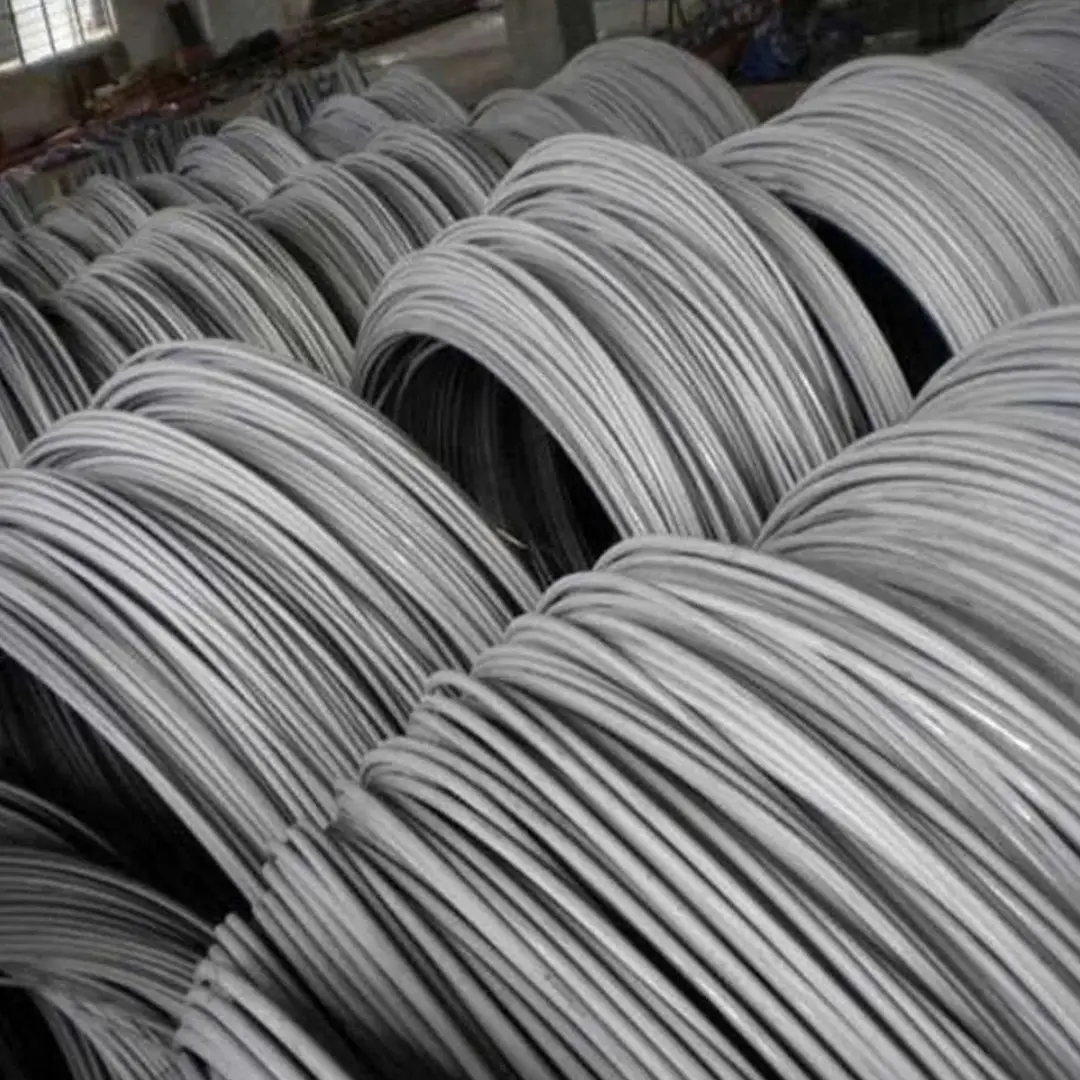
enamelled-round-aluminium-winding-wire

Enamelled Round Aluminium Winding Wire

Enamelled Round Aluminium Winding Wire is a high-performance wire made from high-grade aluminum and coated with a thin layer of enamel insulation. This wire offers a cost-effective alternative to copper winding wire, providing good electrical conductivity while being lighter and more affordable. The enamel coating ensures excellent electrical insulation, high dielectric strength, and resistance to heat, making it suitable for use in motors, transformers, inductors, and other electrical devices. Its round shape allows for smooth and efficient winding, ensuring precision and reliability in manufacturing processes. Ideal for applications where weight and cost are important considerations without compromising on performance.

size-range
Size Range

0.234 mm to 1.70 mm

applications
Applications

A cost-effective alternative for transformers and household appliances.

Enamelled Round Aluminium Winding Wires Product Range

Type of Enamelled Wire Single Cost Single Cost Single Cost Dual Cost
Specification Standard IS-13730 PART- 9 , IEC 60317-9 IS-13730 IS-13730 PART- 15 , IEC 60317-15 IS-13730 PART- 25 , IEC 60317-25 & NEMA-1000 -35A/73A
Thermal Class 130 155 180 200/200
Chemical Base of Base Coat Polyester Modified Polyester Polyesterimide Polyesterimide
Chemical Base of Top Coat NA NA NA Polyamideimide
Range of Wire Size 0.234 – 1.70 mm 0.234 – 1.70 mm 0.234 – 1.70 mm 0.234 – 1.70 mm
Insulation Grade Grade-2 Grade-2 Grade-2 Grade-2 / Heavy
Standard colour Brownish Brownish Brownish Brownish
UL Listed
TECHANICAL TEST
Flexibility Good Good Good Very Good
Coefficient of Friction 5.50 Max. 5.50 Max. 5.50 Max. 5.50 Max.
Elongation 20% Min. 20% Min. 20% Min. 20% Min.
Resistance of Referigerent NA NA NA Very Good
Adherence Good Good Good Very Good
Pin-Hole Testing at 2.0 kv DC Max. 5 Faults/ 30 Meter Max. 5 Faults/ 30 Meter Max. 5 Faults/ 30 Meter Max. 5 Faults/ 30 Meter
Heat shock at 155 C 175 C 200 C 240 C
Cut Through Test 240 C 280 C 300 C 320 C
Tan-Delta Bending Point 100 - 120 C 140 - 160 C 180 - 200 C 175 - 200 C